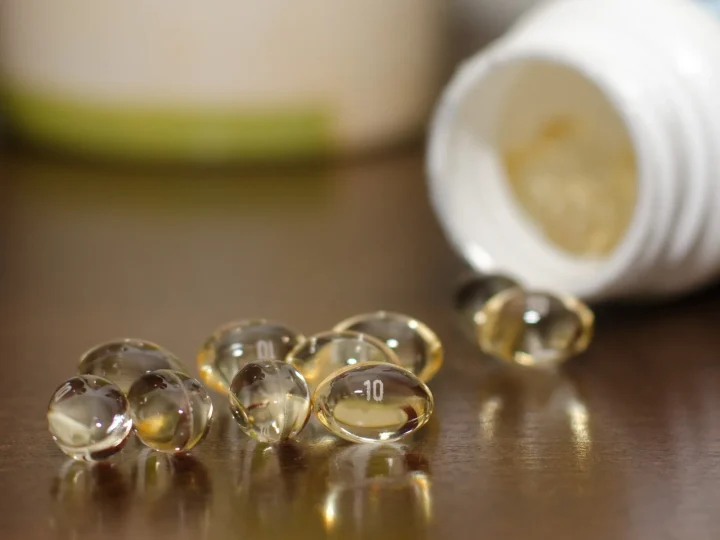
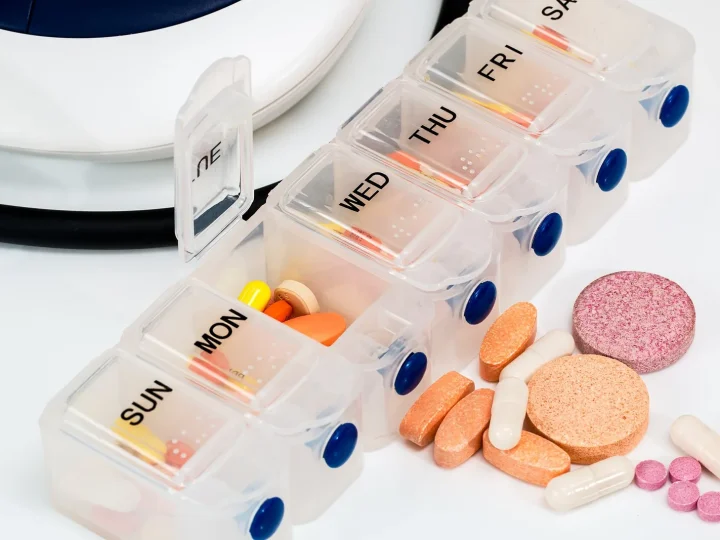
Vitamin D products appear as softgels, capsules, gummies, drops, and sprays. The useful comparison points are form, amount, serving size, and documentation.
Form
D3 (cholecalciferol) raised 25(OH)D more and maintained it longer than D2 in evidence summarized by NIH ODS. D2 is used in some products and is common in UV-treated mushrooms. Identify the form before comparing amounts.
Units
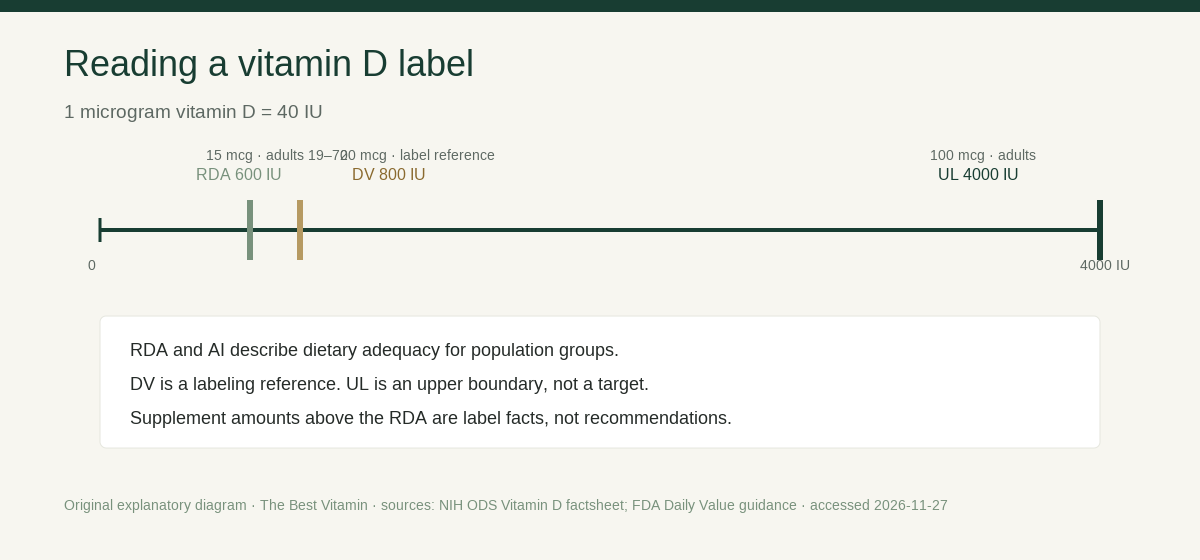
Labels show micrograms with IU in parentheses. One mcg equals 40 IU. FDA’s Daily Value is 20 mcg (800 IU); the adult RDA is 15 mcg (600 IU) through age 70 and 20 mcg (800 IU) over 70. The adult UL is 100 mcg (4,000 IU)/day.
Serving size and format
A 2,000 IU softgel and a 1,000 IU drop may both be labeled as one serving, but serving definitions vary. Record the number of servings per container and the amount per serving. Liquid products should state the amount per measured volume.
Other ingredients
Softgels often use olive oil or another carrier fat; dietary fat enhances absorption of fat-soluble vitamin D. Gummies may contain sweeteners and pectin or gelatin.
Combination products
D + K products add a second ingredient with its own form and amount. Compare the D and K components separately, and see the dedicated D3 + K2 guide.
Quality documentation
Look for a named certification with a verifiable listing. Do not accept an unattributed “tested” claim as independent verification.