The Supplement Facts panel is the most useful single source of information on a vitamin product. FDA requires specific elements, but many nutrients appear voluntarily. This guide explains how to read each part and what to record.
Serving size and servings per container
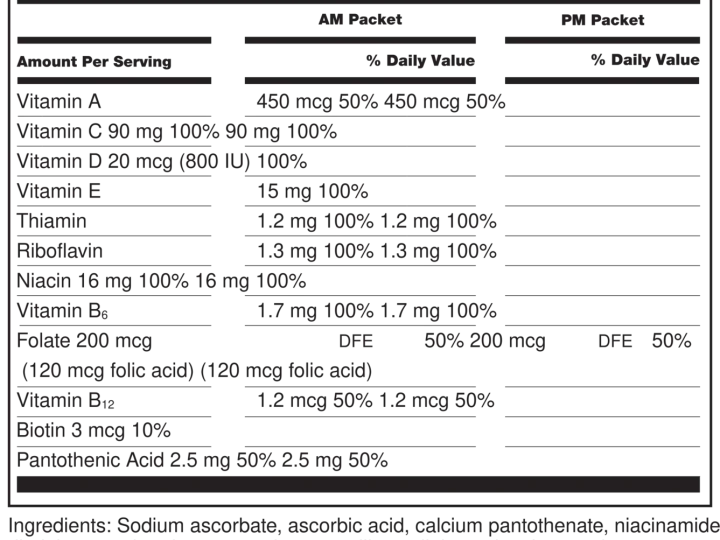
These two lines define the unit of comparison. A “serving” may be one capsule, two capsules, one scoop, or a measured volume of liquid. Record both numbers and use them consistently when comparing products.
Amount per serving and % Daily Value
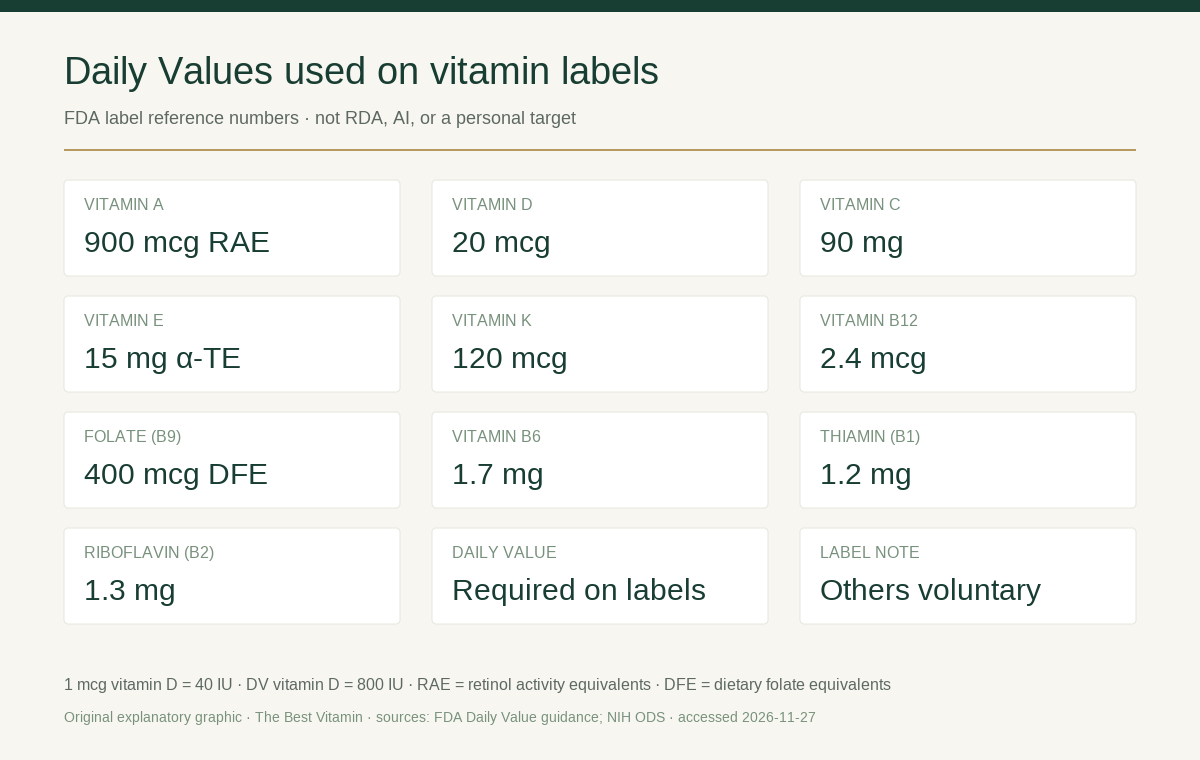
The amount column shows the quantity of each listed ingredient in one serving. The % Daily Value (%DV) column expresses that amount against FDA’s Daily Value for the nutrient. FDA DVs include vitamin A 900 mcg RAE, vitamin D 20 mcg, vitamin C 90 mg, vitamin E 15 mg alpha-tocopherol, vitamin K 120 mcg, B12 2.4 mcg, folate 400 mcg DFE, thiamin 1.2 mg, riboflavin 1.3 mg, and B6 1.7 mg. A %DV above 100% is common in supplements and does not by itself indicate a problem or a benefit.
Units and forms
Pay close attention to units: mcg RAE for vitamin A, mcg DFE for folate, mcg or IU for vitamin D, mg alpha-tocopherol for vitamin E. The ingredient name often includes the form in parentheses — for example “Vitamin D3 (cholecalciferol)” or “Folate (as L-5-methyltetrahydrofolate calcium)”. The form belongs in your product notes.
Other ingredients
This section lists everything else in the product: binders, fillers, flow agents, sweeteners, flavors, colors, and the capsule or softgel shell. It is required and can help explain allergen or dietary-suitability questions. It is not the same as an allergen declaration.
Proprietary blends
When ingredients are grouped in a proprietary blend, the panel may give a total weight without disclosing the individual amounts. That limits meaningful comparison. See Understanding Proprietary Blends.
What the panel does not tell you
A Supplement Facts panel does not prove identity, purity, potency, or batch-level testing. Those claims require separate documentation. It also does not establish that a product is appropriate for you. FDA does not approve dietary supplements before they are marketed.
A practical recording template
- Product name, brand, manufacturer, SKU
- Serving size and servings per container
- Each active ingredient, form, amount, and %DV
- Other ingredients and allergen statement
- Suggested use and storage statement
- Source URL and date the information was checked