Ingredient transparency is not a single certification. It is the degree to which a product discloses what is in it in a form that can be checked and compared.
Signals of transparent labeling
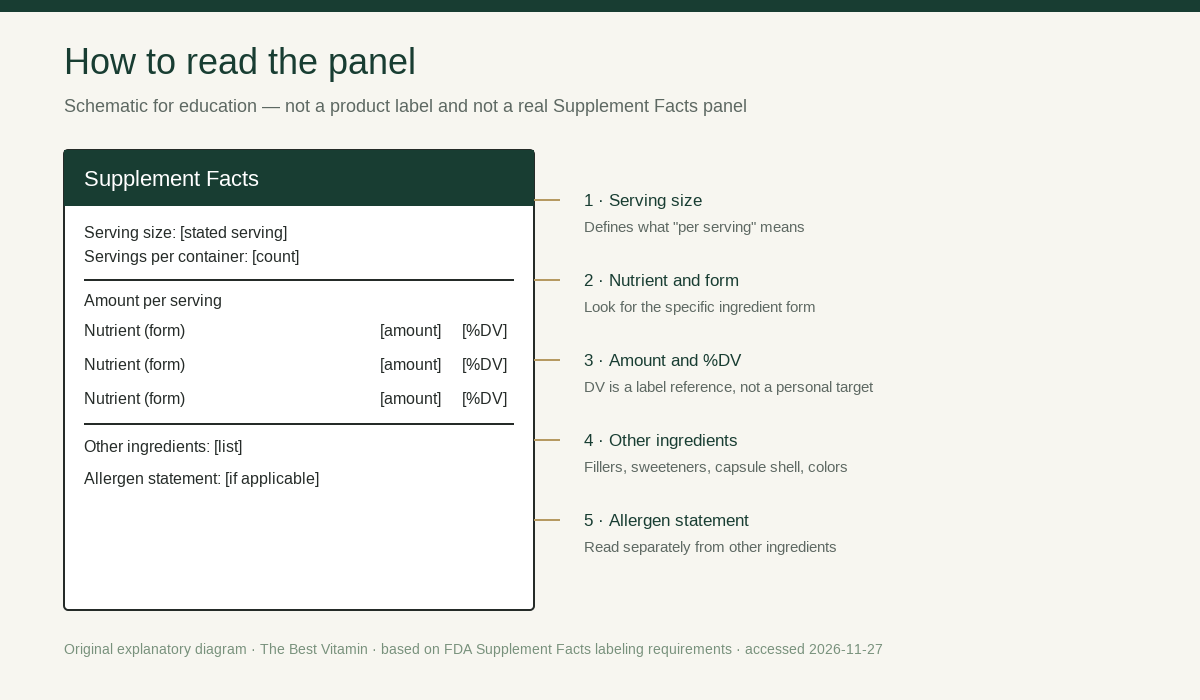
- Specific ingredient forms are named (for example, cholecalciferol rather than only “vitamin D”).
- Amounts are given per serving with clear units.
- Other ingredients are listed in full.
- Allergen statements are explicit.
- Suggested use and storage are stated.
- Quality documentation is linked.
Common gaps
Proprietary blends, vague terms such as “vitamin complex,” and missing allergen declarations all reduce transparency. So does a label that lists a nutrient without identifying its form when multiple forms exist in commerce.
What to record
For each product, note the disclosed fields, the missing fields, and the source URL with a verification date. A product with gaps is not automatically a bad product — but the gaps must be visible in any comparison.