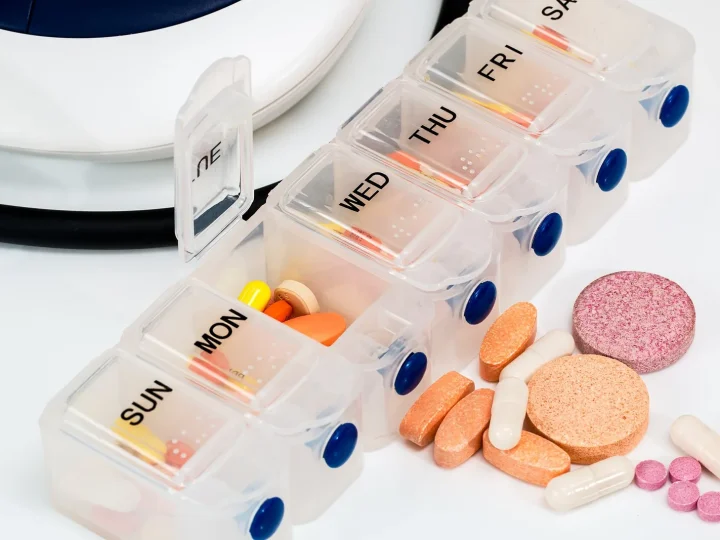
B12 supplements are sold in tablets, capsules, gummies, liquids, sprays, and lozenges. Product selection is easier when marketing claims are separated from label facts.
Forms
Cyanocobalamin is the most common. Methylcobalamin and adenosylcobalamin are coenzyme forms; hydroxycobalamin is used in some products. NIH ODS states there is no evidence that absorption differs by supplement form and that sublingual and oral forms appear equally effective.
Amounts and reference values
The adult RDA is 2.4 mcg and FDA’s Daily Value is 2.4 mcg. Standalone products commonly contain 500–1,000 mcg or more. These are label amounts, not recommended intakes. No UL has been established.
Absorption context
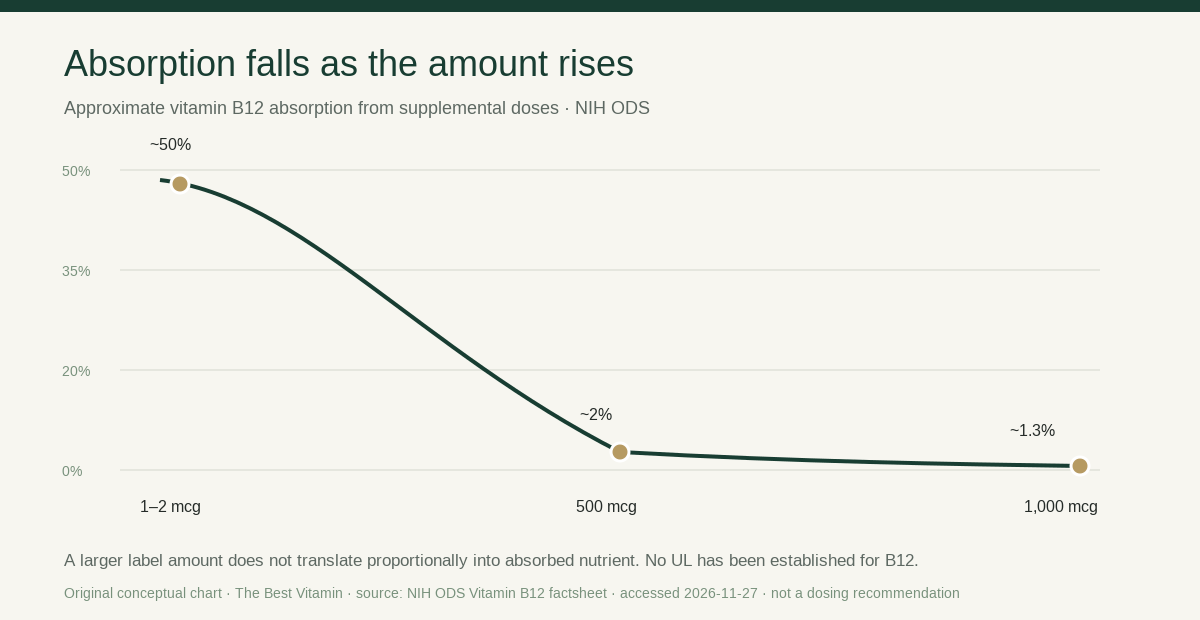
Absorption is approximately 50% at 1–2 mcg, about 2% at 500 mcg, and about 1.3% at 1,000 mcg. A large label amount does not translate proportionally into absorbed nutrient.
Format and other ingredients
Check serving size, whether the product is swallowed or chewed, and the sweeteners or allergens in gummy and lozenge products. Liquid products should state the amount per drop or measured volume.
Who should seek medical advice
Deficiency can occur despite adequate dietary intake in people with pernicious anemia, atrophic gastritis, malabsorption, or a history of gastrointestinal surgery. Neurologic symptoms can occur without anemia; this publication does not provide diagnosis or treatment advice.