Thiamin, also called vitamin B1, is a water-soluble vitamin involved in energy metabolism. This guide summarizes what can be verified from authoritative reference sources.
Forms and label terminology
Supplements generally use thiamin mononitrate or thiamin hydrochloride. Benfotiamine is a synthetic derivative that is not water-soluble and is converted to thiamin in the body. The active coenzyme form is thiamin diphosphate (TDP), also called thiamin pyrophosphate.
Role and food sources
TDP is a cofactor for enzymes involved in glucose, amino acid, and lipid metabolism. Whole grains, enriched breads and cereals, pork, meat, fish, and legumes are important sources. About half of dietary thiamin in the US comes from foods to which thiamin has been added.
Reference values
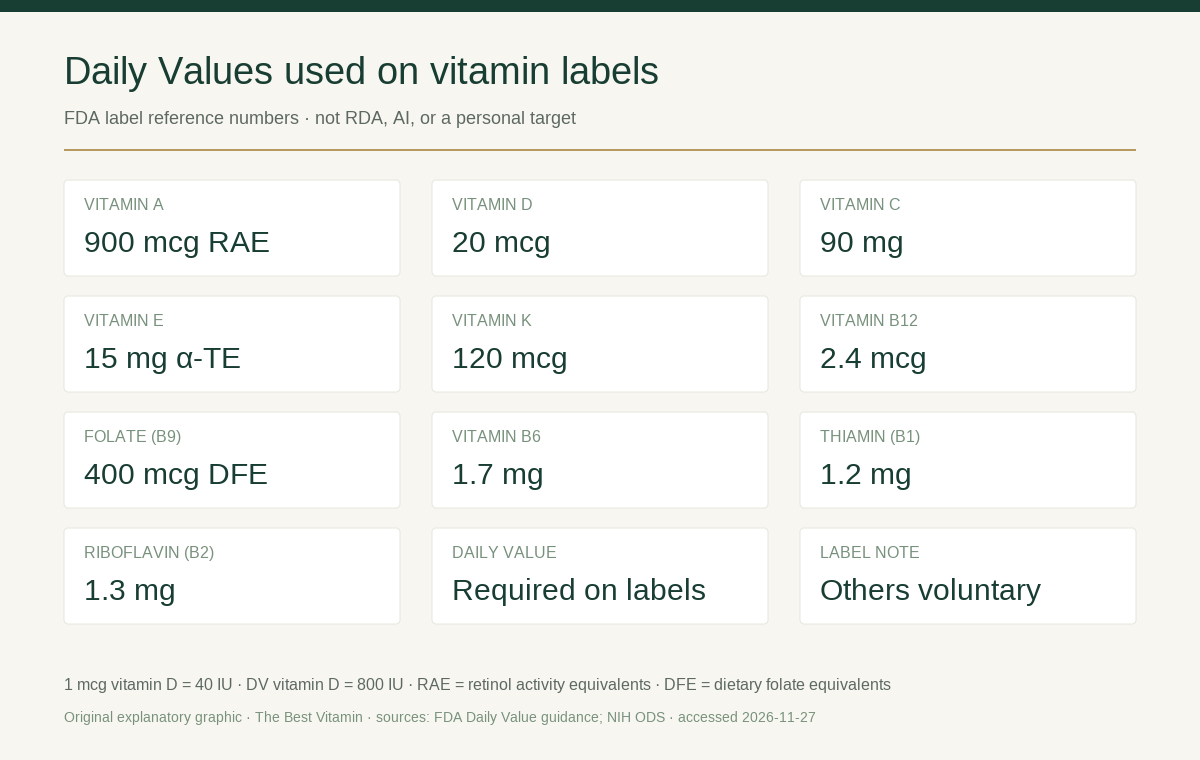
The RDA for adult men is 1.2 mg/day and for adult women 1.1 mg/day. No UL has been established because adverse effects from high intakes have not been reported, though the FNB cautions that excessive amounts could still be harmful.
Formulation notes
Thiamin is water-soluble and only small amounts are stored. Heat and cooking losses are meaningful: boiling can leach thiamin into cooking water, and milling removes thiamin-rich parts of grain, which is why enrichment is common.
Evidence boundaries
Deficiency is a well-defined medical condition. Claims that thiamin supplements improve outcomes in diabetes, heart failure, or cognitive conditions are not established by the cited evidence; larger studies are needed.
Reference summary
- Common forms
- Thiamin mononitrate, thiamin hydrochloride; benfotiamine is a synthetic derivative. The metabolically active cofactor is thiamin diphosphate (TDP).
- Food sources
- Whole and enriched grains, breads and cereals, pork, meat, fish, black beans, egg noodles.
- Dietary reference values
- RDA adults 19–50: men 1.2 mg, women 1.1 mg. 51+: men 1.2 mg, women 1.1 mg. Pregnancy and lactation 14–50: 1.4 mg. Infants: AI 0.2–0.3 mg.
- Upper intake level
- No UL established. The FNB noted a lack of reported adverse effects from high intakes while still cautioning against excessive amounts.
- Safety notes
- Thiamin deficiency causes beriberi and Wernicke–Korsakoff syndrome. Studies of thiamin for diabetes, heart failure, and Alzheimer's disease are small and inconclusive.